|
Highlights of the day – ICMA AGM & Conference, Frankfurt, June 6
|
|
|
|
Here are the highlights from the second day of the 57th ICMA AGM & Conference in Frankfurt. On Thursday evening we were delighted to host our Gala reception in the Gesellschaftshaus Palmengarten, where delegates enjoyed entertainment and food in beautiful surroundings.
Follow ICMA on LinkedIn for extra content on the speakers and panels.
|
|
|
Keynote: From cables to constellation: Converging risks in an age of upheaval
|
|
|
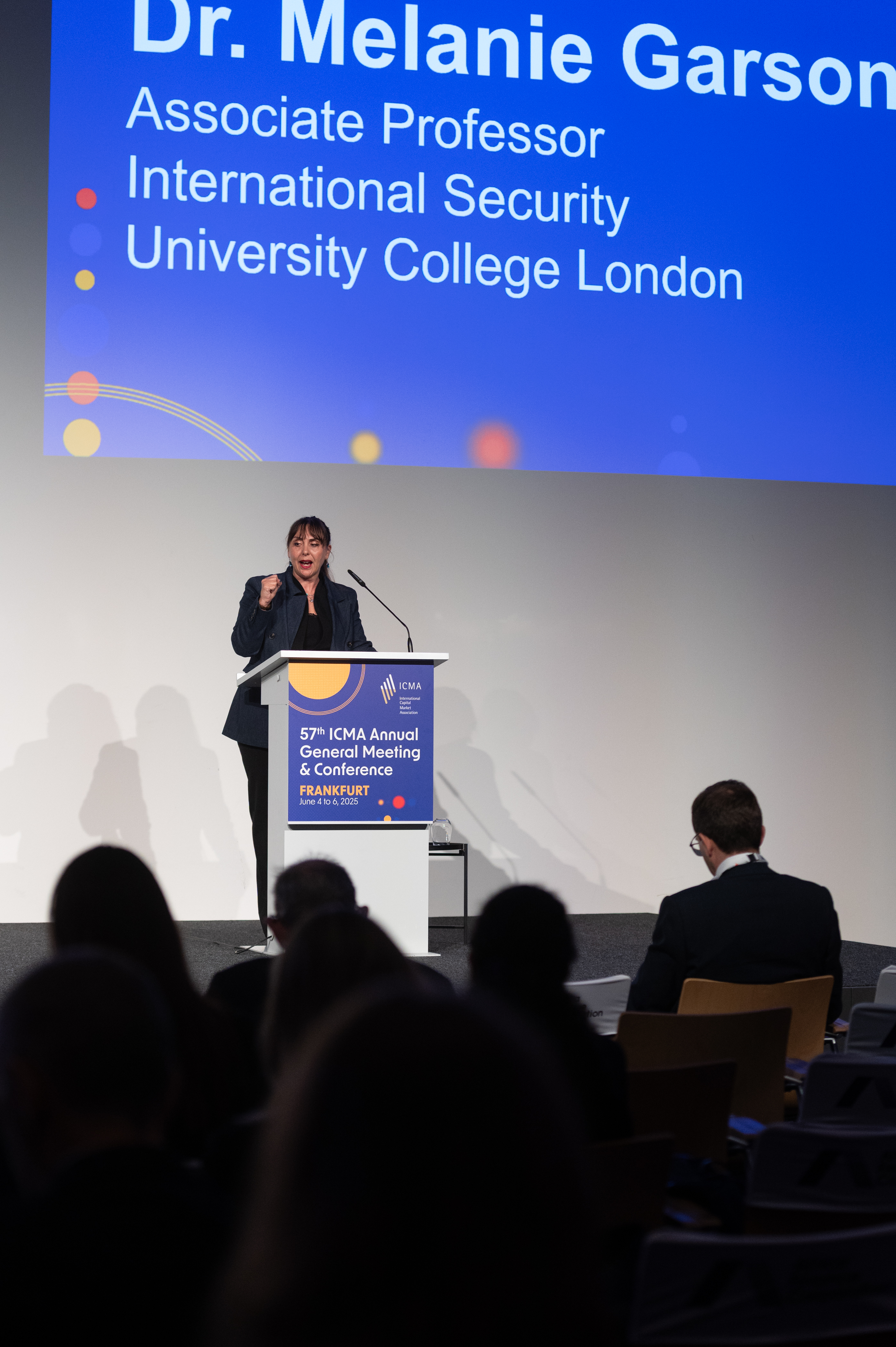
In her keynote, Dr. Melanie Garson, Associate Professor of International Security at the University College London, uncovered the complexities of international relations in this new digital age.
Incredibly poignant and relevant, her speech touched upon how in times of uncertainty, states will seek to maximise power across all domains. Years ago, the mantra of ‘whoever controls the sea controls trade and whoever controls trade controls the world’ rang true.
Nowadays, AI and data put nations at the precipice of control. Whether it is Putin saying, “he who controls AI controls the world”, or Sam Altman musing, “compute is the new currency”, the tide has clearly shifted.
Dr. Garson gave the delegates a stark warning. Despite being a self-claimed tech optimist, it is imperative that we are careful when managing the development of these novel technologies, in order to protect and promote social cohesion and keep people’s data safe.
|
|
|
|
The AI revolution and its impact on the bond markets
|
|
|
|
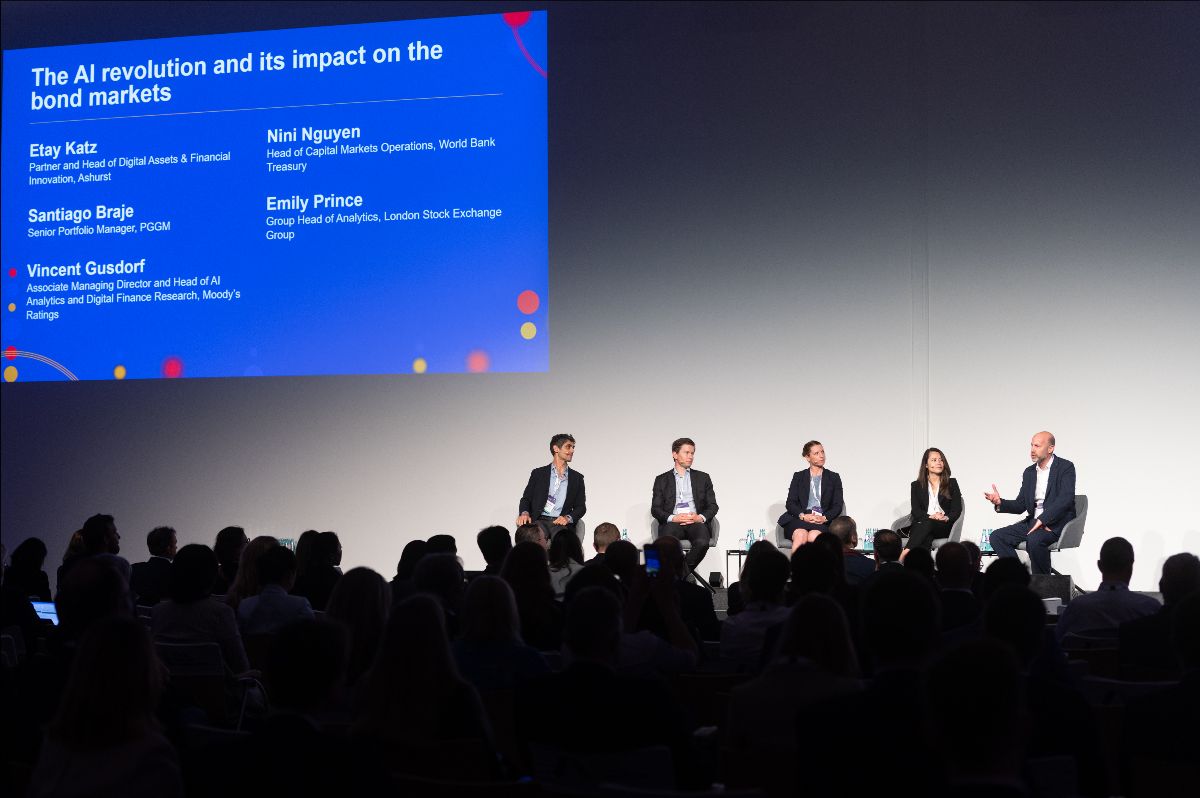
Etay Katz, Partner and Head of Digital Assets and Financial Innovation at Ashurst, led a discussion centred around the AI revolution and its impact on the bond markets.
The conversation explored the key AI use cases across the bond lifecycle and assessed the various benefits and considerations for the different types of AI and how applicable they are to the capital markets industry.
To begin, Vincent Gusdorf, Associate Managing Director and Head of AI Analytics and Digital Finance Research at Moody’s Ratings, gave an overview of the evolution of AI in the 2000s, explaining how we moved from advanced computer processing to LLM and AI models that can even produce images.
Nini Nguyen, Head of Capital Markets Operations at the World Bank Treasury, also explained some of the use cases for AI they are implementing, including using it to manage unstructured data and ensure that sustainability goals are met.
A key part of the discussion saw the panel consider the global and geopolitical factors at play, which are currently driving the race to AI innovation, and the impact this could have on adoption in the industry.
The panel also included Santiago Braje, Senior Portfolio Manager at PGGM, and Emily Prince, Group Head of Analytics at London Stock Exchange Group, who highlighted that we can’t force AI solutions on all problems, calling for leaders to focus AI efforts on the most relevant challenges.
|
|
|
|
Digital transformation of capital markets: where do we stand?
|
|
|
|
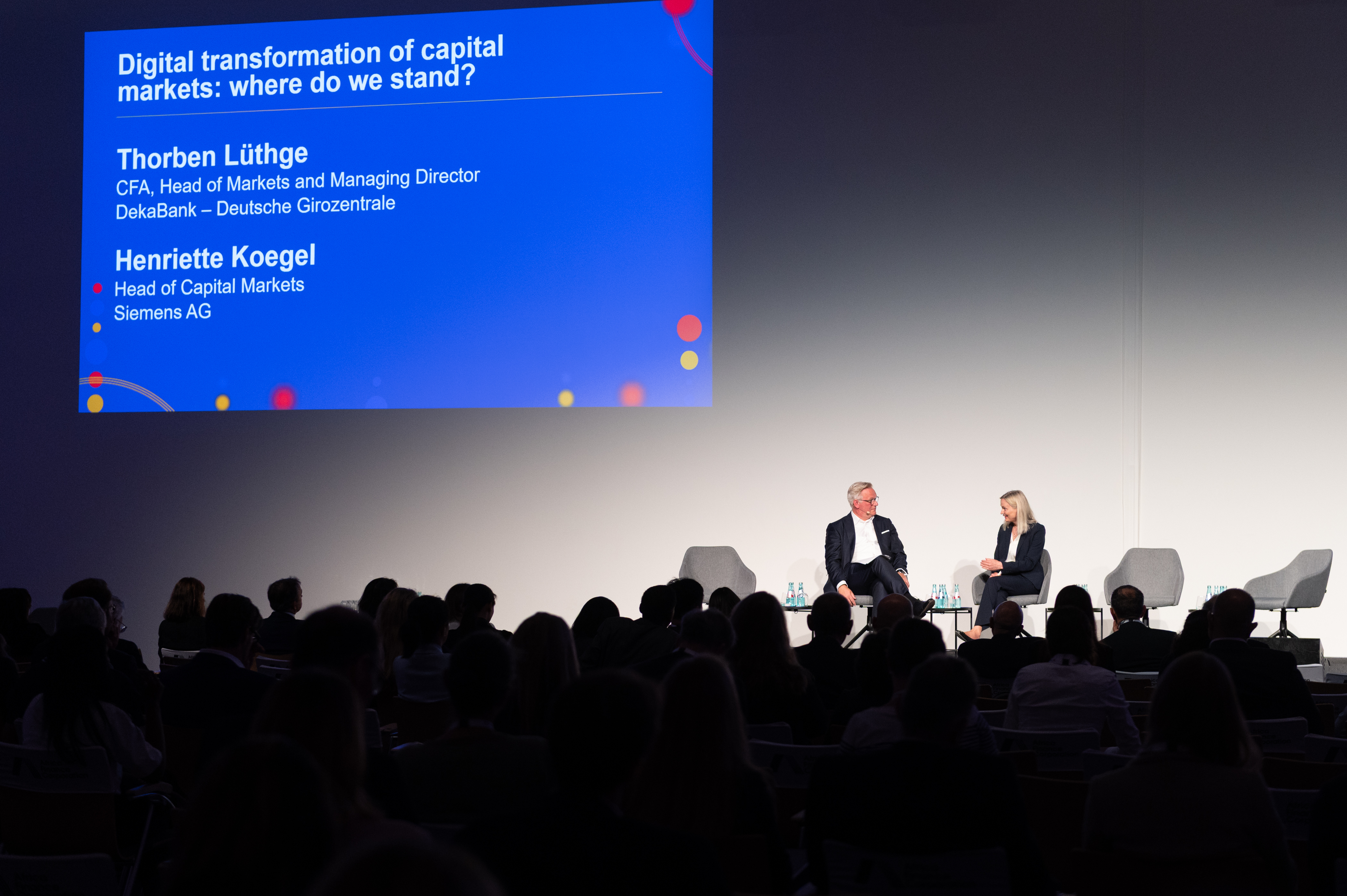
Henriette Koegel, Head of Capital Markets at Siemens AG and Thorben Lüthge, Head of Markets and Managing Director DekaBank – Deutsche Girozentrale, discussed the digital transformation of capital markets and where we currently stand.
In his opening remarks, Thorben shared the trials and tribulations of the digital transformation so far. While positive steps have been made, by increasing primary market activity, facilitating settlement off- and on-chain, and, most importantly, ensuring the technology works, Thorben stressed that there is still a way to go.
“Now is the time where we are separating the potential use cases from the real use cases”
We need deeper secondary markets and greater standardisation to truly realise the benefits of this new technology. His call to action was that we must work together towards common standards in order to push this technology on.
Henriette shared the digital transformation journey of Siemens, which has been central to the development of blockchain in European financial markets.
Siemens achieved the first fully digital securities transaction on the blockchain in 2019. In 2021 they issued the first digital bond following Germany’s passing of blockchain legislation. This was a €300 million digital bond issued during the ECB trials on the Bundesbank blockchain – the first to achieve same-day settlement with a real money transaction.
|
|
|
|
Climate Transition Finance in Japan and the next steps to decarbonization
|
|
|
|
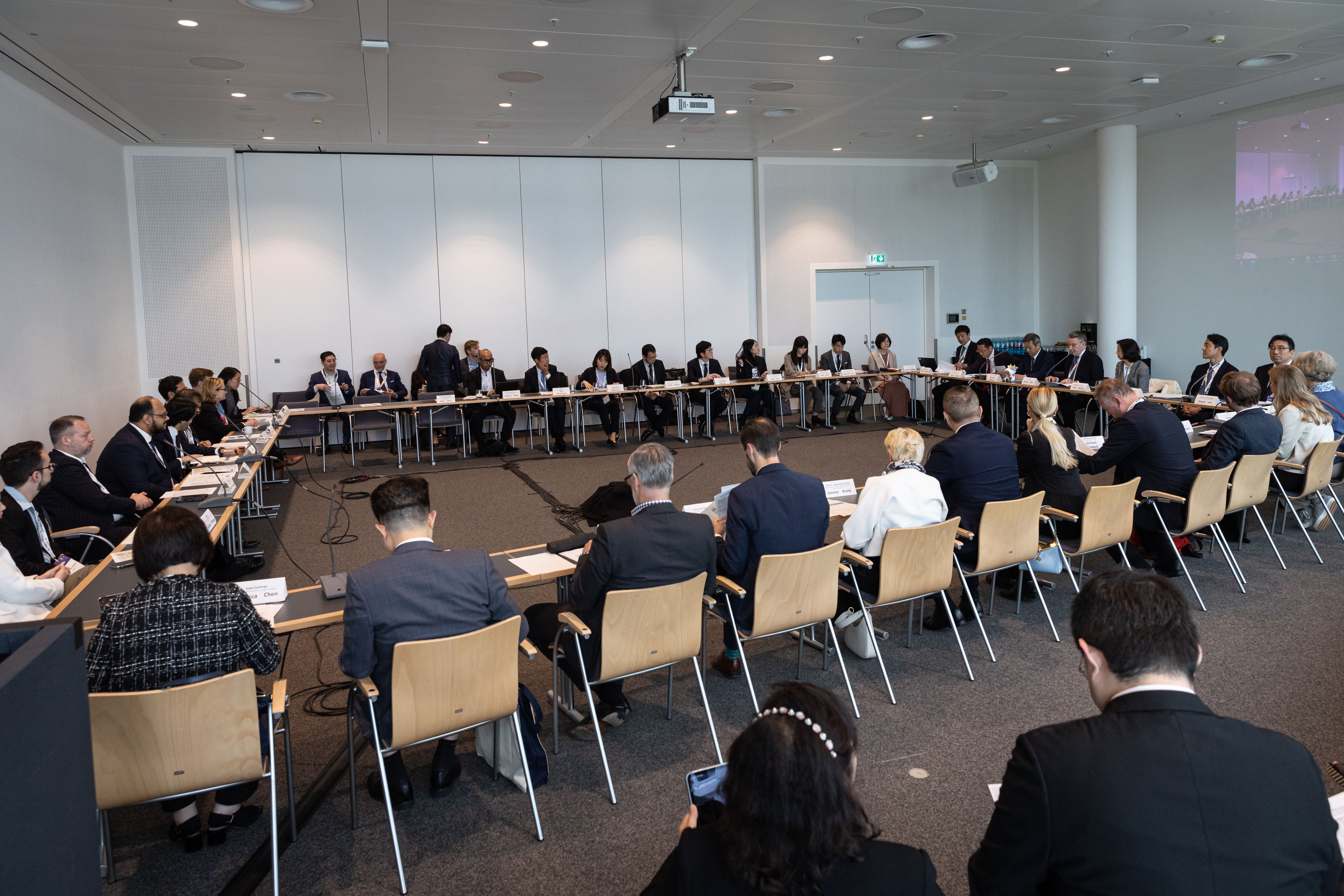
Japan Securities Dealers Association organised a closed door roundtable on transition finance, allowing a candid discussion between Japanese official sector officials and leading international market stakeholders to discuss the latest developments in Japanese transition finance. Representatives from Japan's Ministry of Economy, Trade and Industry; Ministry of Finance and the innovative GX Acceleration Agency shared their respective plans for industrial policy, sovereign issuance and market reforms to support climate transition, with a range of perspectives on transition shared by other global underwriters, issuers, and investors.
|
|
|
|
Keynote: Unlocking niche capital: How African issuers are reimagining market access beyond the Eurobond
|
|
|
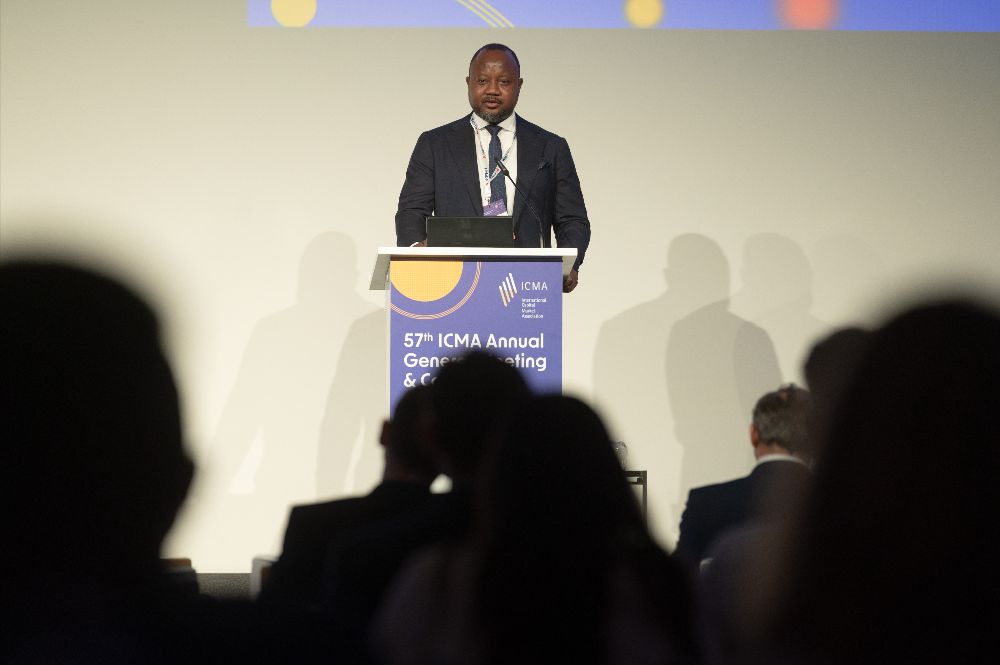
In our second keynote speech, Banji Fehintola, Executive Board Member and Head of Financial Services at African Finance Corporation discussed his work in finding innovative ways to unlock niche new capital for the African continent.
While interest rates in the west have risen, they have declined in several Asian regions, providing opportunities and a strategic window for African issuers, offering access to a niche pool of capital.
Leveraging highly rated Multilateral Development Banks helps African issuers not only to gain access to financing, but also to credit enhancement. Owing to market volatility, it is time to explore adding more niche pathways to capital, especially for those issuers that struggle with access to main markets.
|
|
|
|
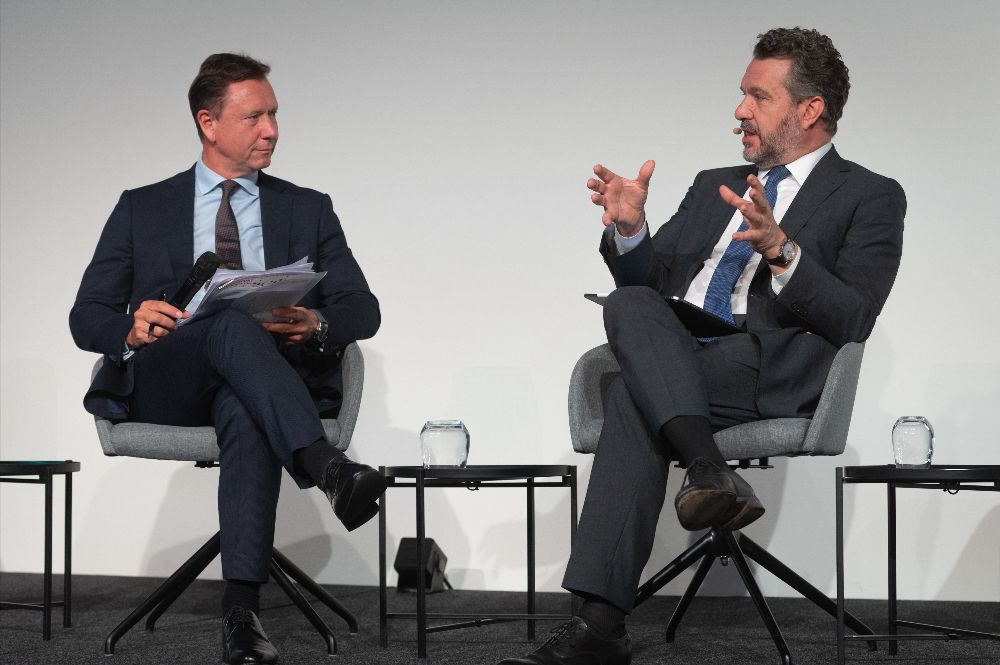
Delegates returned to the hall for an ‘in conversation’ session between Rodrigo Buenaventura, Secretary General at IOSCO and Bryan Pascoe, Chief Executive ICMA.
They discussed the recent accomplishments, with Rodrigo highlighting IOSCO’s work with sustainable bonds, producing a report which brought clarity to the space. He also highlighted ICMA’s important work around digital bonds.
When asked what the near future may bring, Rodrigo said they are dedicating resources to understanding the interconnectedness of repo over the next 12 months.
A key part of the conversation was the discussion of financial stability and the work being done to bring in appropriate regulation to support it. The FSB has been doing plenty of great work around this topic, working closely with the industry to produce extensive reports to advise regulators.
Rodrigo also mentioned the Bank of England’s vital work in the space, with the system-wide exploratory scenario aiming to improve the understanding of the behaviours of banks and non-bank financial institutions during stressed financial market conditions.
He added that legislation must be designed for different markets as they have their own idiosyncrasies. He also explained how providing good data to regulators is vital – calling for better data reporting.
"We need to ensure the data regulators get is useful and meaningful as the worst thing we can do is develop policy tools that are not evidence-based and based on good data. Without good data, regulations risk not being targeted and being far more invasive than necessary."
|
|
|
|
Developing bond markets in emerging economies
|
|
|

|
The penultimate panel session of the conference was moderated by Natalie Westerbarkey, Managing Director and Co-Head of Market Practice & Regulatory Policy at ICMA. The topic discussed was developing bond markets in emerging economies.
The panel explored strategic priorities related to fixed income markets in emerging economies, such as digital bonds, repo markets and how to get pension funds more involved from an issuer perspective.
All three panellists highlighted specific aspects respectively with a focus on Africa, Asia and Latin America.
Jianyang Ma, Chairman at Shanghai Clearing House, spoke about the fast growth of the domestic Chinese bond market, and the utility of the Panda Bond structure for offshore Chinese issuers.
In addition, Modupe Famakinwa, Head of Funding and Capital Markets at Africa Finance Corporation, spoke about the importance of promoting initiatives to harness domestic capital flows and issue bonds in domestic currency.
The panel also highlighted the challenges that impact bond markets in frontier markets, as well as those relevant to large economies, such as technology aspects and the wider macroeconomic implications.
The panel also included Flavia Palacios, Chief Executive of Opea and Member of the Board of Directors of ANBIMA, and Philip Busykes, Chief Executive Officer at Frontclear Management B.V.
|
|
|
|
Building resilience in the working environment
|
|
|
|
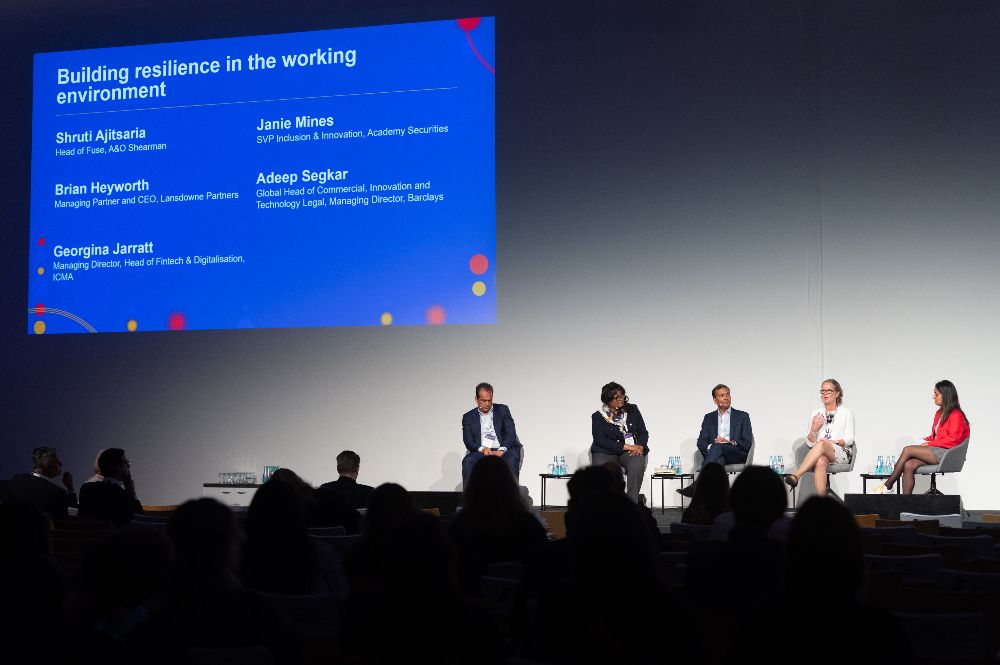
Our final panel of the conference was a bit of a different one, and was moderated by Shruti Ajitsaria, Head of Fuse at A&O Shearman.
This panel was actually borne out of an encounter in 2023 between Shruti and Georgina, who had the realisation that they, and everyone attending this conference, will at times in their life need to draw on resilience to get them through difficult circumstances.
Georgina Jarratt, Managing Director and Head of Fintech & Digitalisation at ICMA, spoke about her experience with breast cancer shortly after she joined ICMA and how she managed to continue working with the support of friends, colleagues and family. She discussed how the process of treatment has impacted her life to this day and how the experience brought her closer to people, including the moderator, Shruti.
Adeep Segkar, Global Head of Commercial, Innovation and Technology Legal, Managing Director at Barclays, discussed his childhood as the son of a psychiatrist and how it has shaped his worldview, helping him to talk about workplace-related stress and how to deal with it. He also talked about his home life, with his partner passing away after a brief battle with cancer. He spoke about the importance of structure and fitness in helping him overcome these challenges.
Janie Mines, SVP of Innovation & Inclusion at Academy Securities, is a graduate of the US Naval Academy and fought her way through the door. She spoke about how preparation is key. She said there are many things in life that are out of control, so make sure you have a handle on the stuff that is within your control.
Brian Heyworth, Managing Partner and CEO at Lansdowne Partners, had a major breakdown at age 40 and was in psychiatric hospital for two months and on suicide watch. This felt him feeling like his life was over. He now travels the world to promote mental health and resilience in the workplace. He is also the Chair of the Mind Forward Alliance, a leading global not-for-profit membership organisation transforming workplace culture into one that supports the mental health of its employees.
|
|
|
|
Keynote: Power and Progress: Navigating Technology and Prosperity
|
|
|
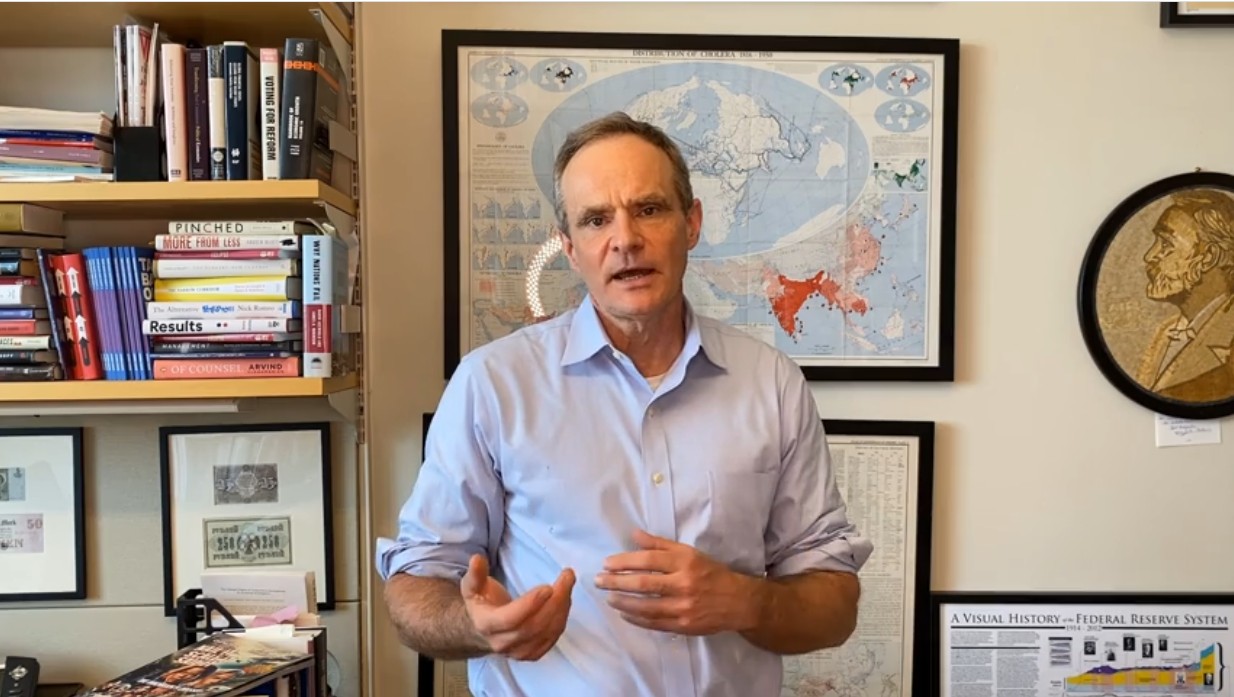
Power and Progress: Navigating Technology and Prosperity - Nobel laureate Simon Johnson examines the complex relationship between technological innovation, financial markets, and sustainable prosperity.
Drawing from historical case studies and recent experiences, including the Global Financial Crisis, Johnson highlights how technology can either amplify inequality or foster shared economic growth, depending on institutional frameworks. Delegates gained a deeper understanding of how robust financial regulation and sound institutional structures not only promote market stability but also ensure long-term economic prosperity and resilience.
|
|
|
To access the full list of sponsors & exhibitors, please click here.
|
|
|
|
|
|
|