|
Highlights of the day – ICMA AGM & Conference, Frankfurt, June 5
|
|
|
|
Welcome to the 57th ICMA AGM & Conference in Frankfurt. This year’s event has brought together nearly 1,200 delegates for a wide range of panels, keynote sessions and conversations that cover the challenges capital markets are facing today.
Here are the highlights from the first full day of conference. Follow ICMA on LinkedIn for extra content on the speakers and panels.
|
|
|
Spotlight on ICMA’s activities in the international capital markets
|
|
|
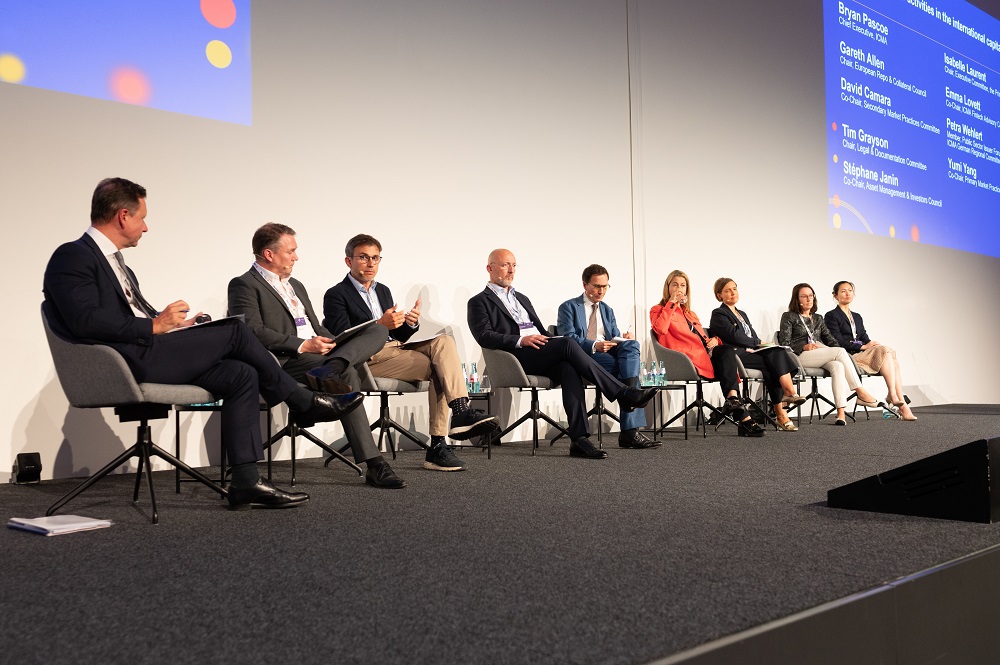
In this panel at the Annual General Meeting, ICMA Chief Executive, Bryan Pascoe, led a conversation between the chairs of the ICMA committees to shine a spotlight on ICMA's activities in the international capital markets.
The panellists discussed their greatest achievements and key activities over the year. The Chairs highlighted ICMA's contributions and involvement in T+1, dematerialised securities, UK listing reforms, sustainable finance, developing digital bonds infrastructure, driving forward a training course on AI in capital markets, and connecting fintech to sustainable finance.
The Chairs' priorities for the medium term centred on T+1, repo clearing and education, AI in trading and facilitating impact reporting, and ramping up the implementation of DLT.
|
|
|
|
Forum of industry leaders: The outlook for the international bond markets
|
|
|
|
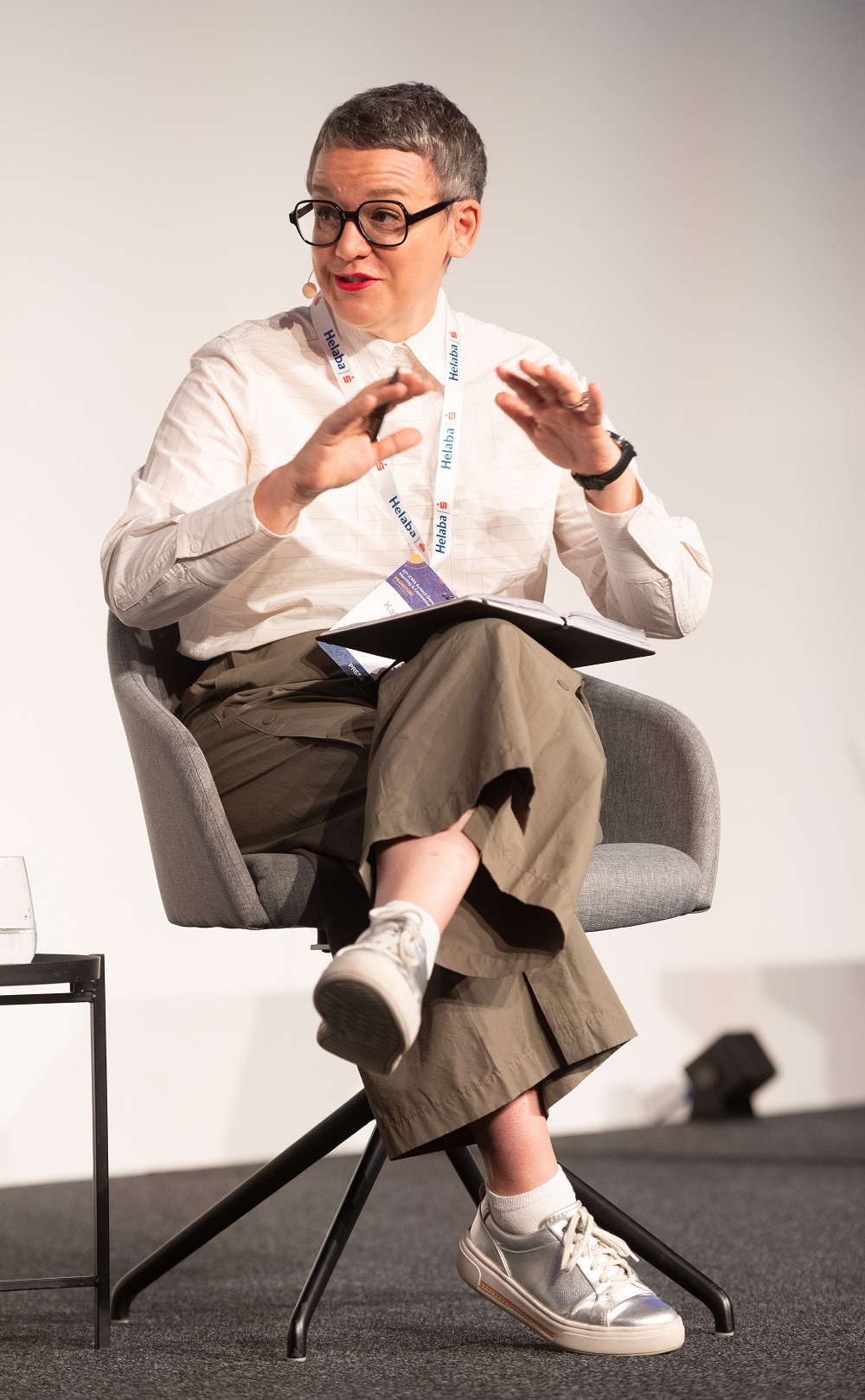
For the first panel of the day, Katie Martin, columnist and Member of the Editorial Board at the Financial Times, led a panel on the outlook for the international bond markets - incredibly relevant given current conversations around the US dollar's reserve currency status.
The panellists discussed the impacts of 'Liberation Day' in the US, both on fixed income markets and on the outlook for the euro. They agreed that Christine Lagarde was correct in saying now is the moment for the euro, given wavering trust in the 'greenback'.
Members of the panel shared how conversations with both US and European asset managers yielded very different outcomes. US asset managers conceded that this current situation is a nightmare but argued that the world will go back to status quo, with the dollar at the head. European asset managers shared a different outlook, saying that this shift has helped wake people up to the fact that Europe should consider rebalancing exposure to the US.
This has helped play into the recent trend of reverse Yankees, which has seen more US companies tapping into the European market, to the tune of $50 billion at the end of May according to Marie-Claire Ouziel, Global Head of Bonds at Commerzbank.
Ingo Mainert, CIO Multi Asset Core, Allianz Global Investors & Member of the Board of Directors at Allianz Global Investors, asserted we are currently in a geopolitical recession. While on the one hand there is heightened economic uncertainty, May saw an all-time high in market capitalisation of bonds and equities.
The panel consisted of Bernard Frenay, Chief Executive of European Markets & ESG at Euroclear SA/NA, Fabio Lisanti, Head of Markets Europe at Citi, Ingo Mainert, CIO Multi Asset Core, Allianz Global Investors & Member of the Board of Directors, Allianz Global Investors GmbH, Marie-Claire Ouziel, Global Head of Bonds at Commerzbank and Emmanuel Rolland, Chief Operating Officer and Chief of Staff at LCH SA.
|
|
|
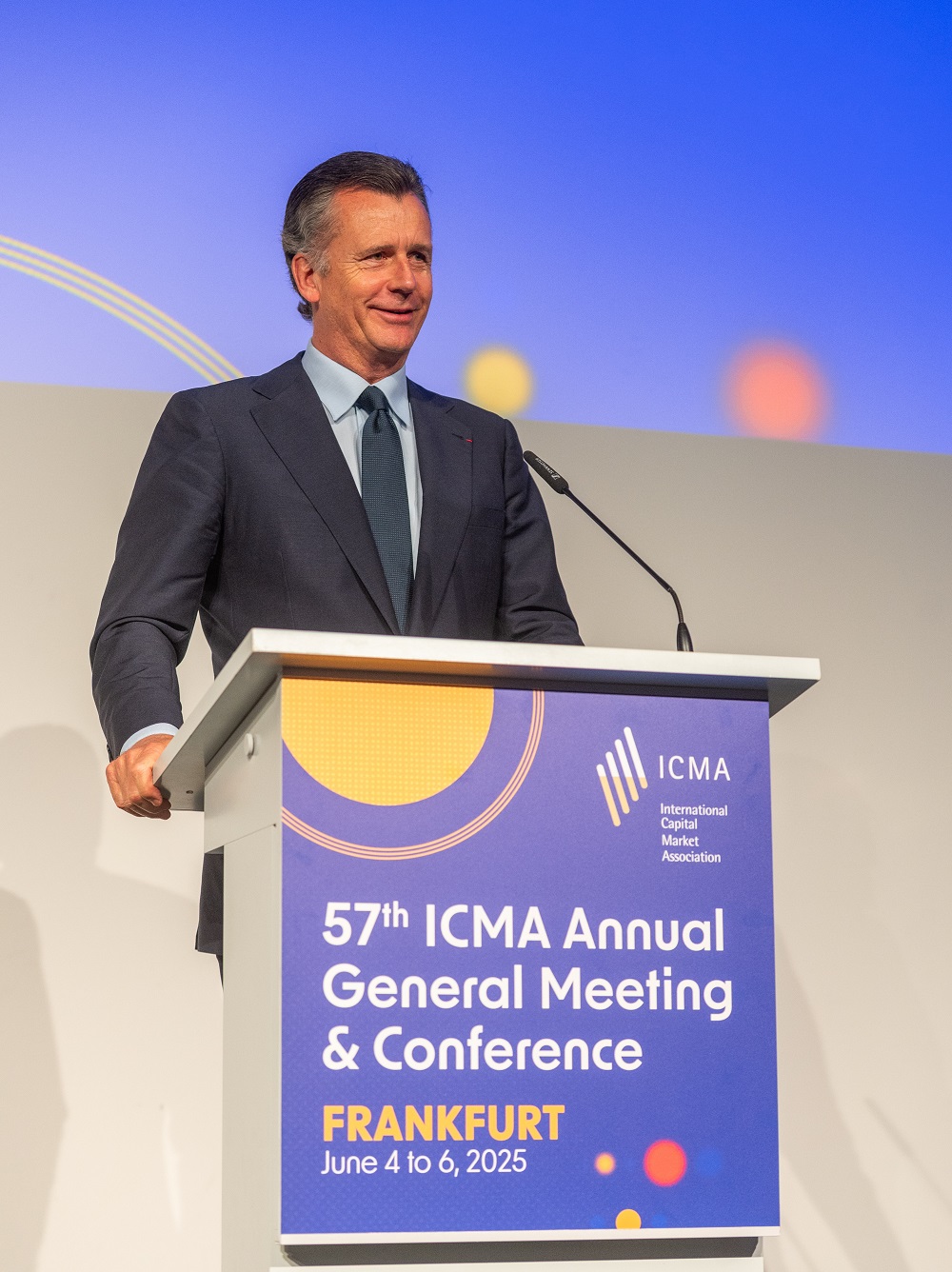
The first keynote of the day was delivered by Philipp Hildebrand, Vice Chairman at BlackRock.
In keeping with the earlier panel, Philipp stated that “This is Europe’s moment”.
However, he said that there is a clear divergence in productivity and capital market depth between Europe and the US, which must be addressed. This can be done through greater use of technology in Europe, as well as the Savings and Investments Union, which will work to mobilise the €10 trillion sitting in bank deposits into Europe’s capital markets.
He also maintains that Europe should develop a mutualised European safe and liquid asset to fully realise the benefits of a capital market union.
|
|
|
|
The landscape for international financial market and capital flows amidst deglobalisation, economic fragmentation and geopolitical shifts
|
|
|
|
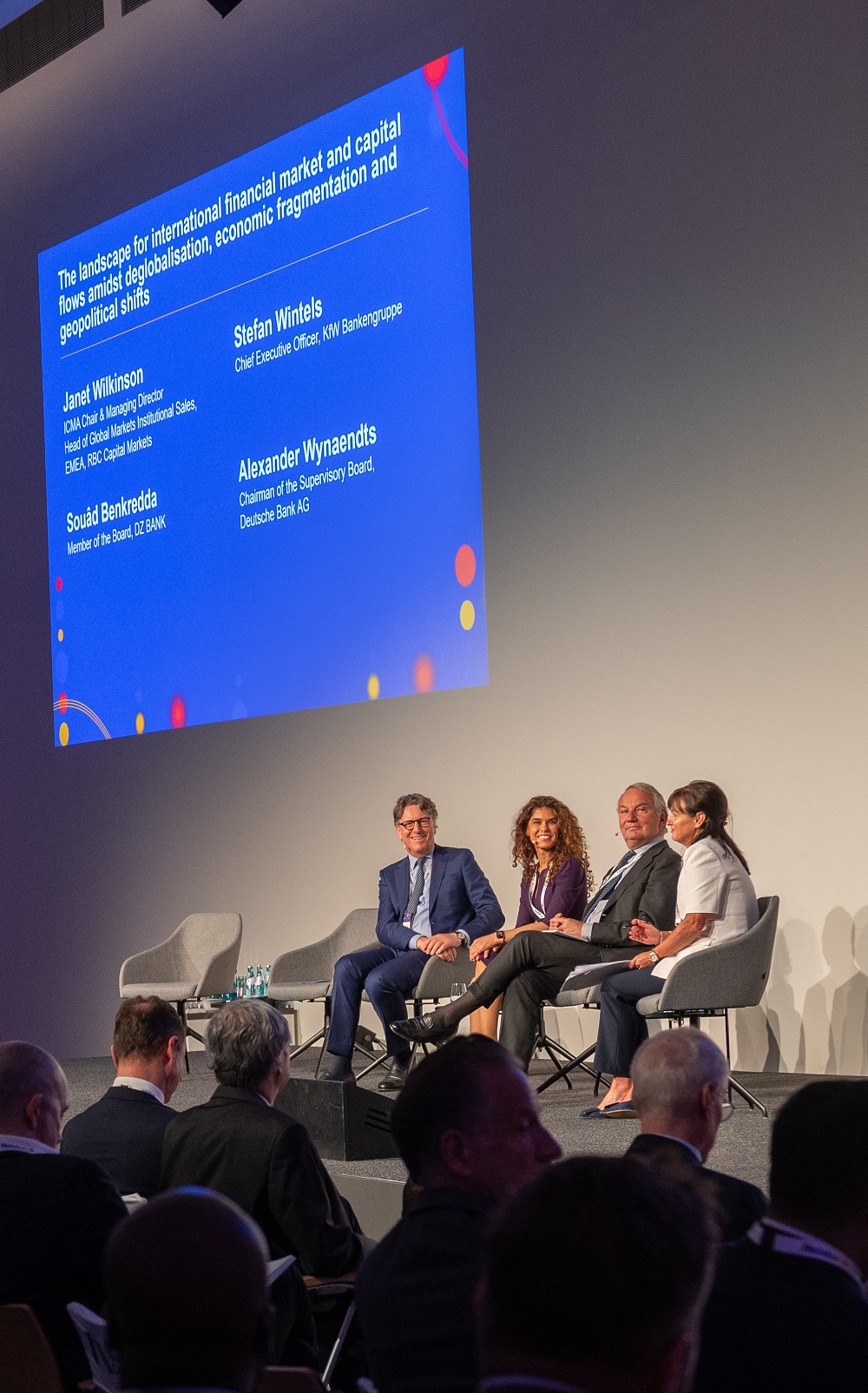
As global capital markets struggle with deglobalisation, economic fragmentation and quick geopolitical gear changes, Europe’s historic competitiveness is being put under stress.
Panellists discussed the crucial importance of adapting regulation to reduce burdens, the implications of sustainable finance policies on infrastructure, and how EU reforms can streamline private sector investment to support public sector spending.
Stefan Wintels expressed his positive outlook for Europe, highlighting that it is still regarded as ‘a place to be’ for investors. He also talked about the importance of having a robust regulatory framework and government in Europe, affordable housing, and the development of green bonds and further innovation to help tackle the climate crisis.
When pushed for their biggest asks at the end of the panel – the overwhelming message was unity. Souâd Benkredda said that people should be part of the vision and make it reality, really thinking about what your role is, Alexander Wynaendts said we must have trust in each other and what we can achieve together and Stefan Wintels said that you must contribute personally to make capital markets part of the solution.
|
|
|
|
Keynote: Trump 2.0 - Domestic and Foreign Policy Priorities and Geopolitical Implications
|
|
|
|
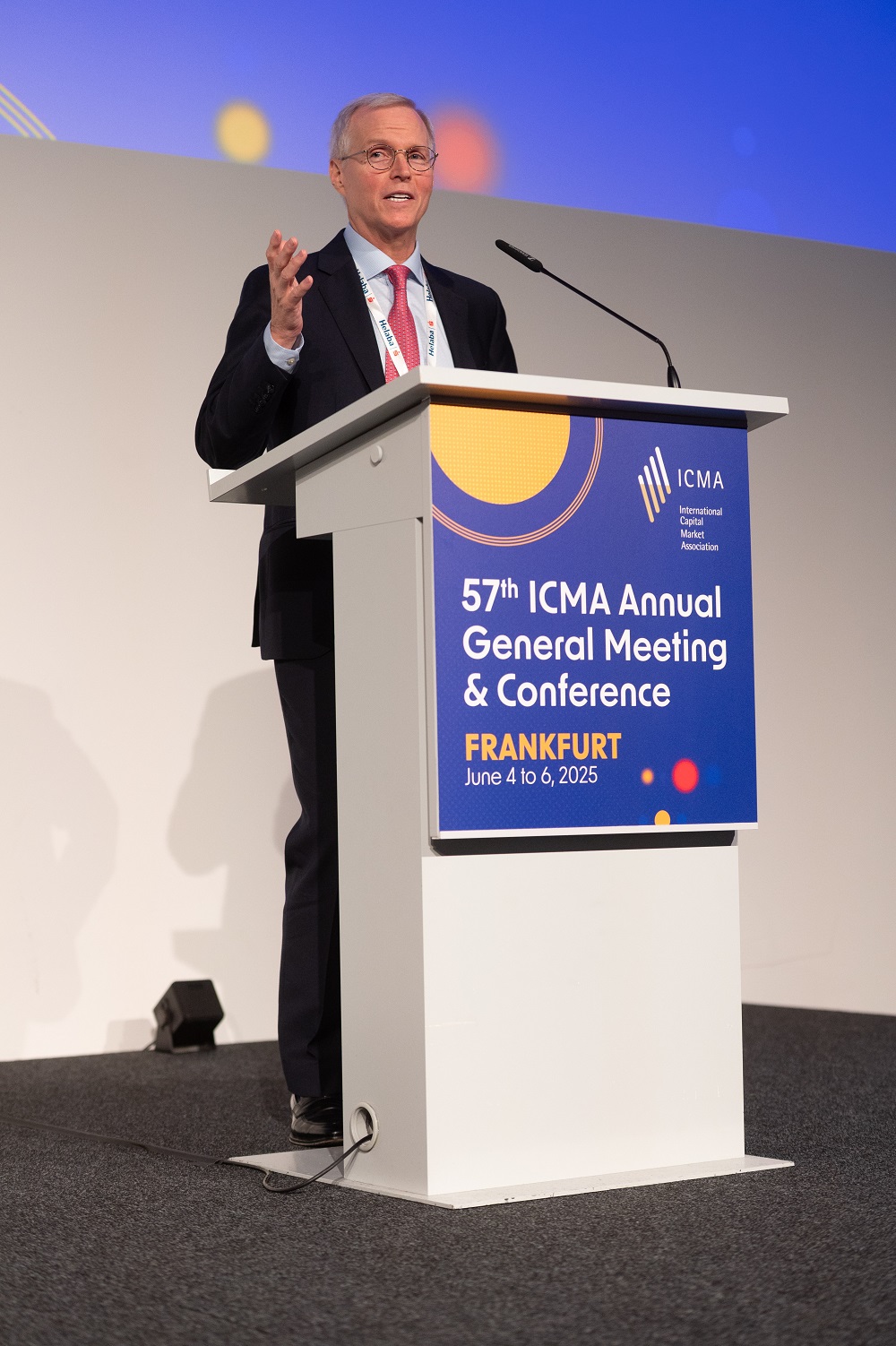
Calling upon years of experience working with Presidential campaigns such as Hillary Clinton in 2016 and Joe Biden in 2020, Charles Myers, Chairman and Founder of Signum Global, discussed Trump’s term so far and the swing in sentiment from his inauguration to today.
He shared that this is an administration that will course-correct when it has to - impacting the bond markets much like we saw with Liberation Day.
Looking out 6-9 months in the future, Charles said that the US will land close to where it is today, in terms of tariffs. He believes the 30% tariff on China will stay until the next round of negotiations, as they de-escalate, which is beneficial for all parties.
The US is however de facto more protectionist – if a Democrat is elected next, the tariffs will stay. Now that supply chains and capital markets are priced in – giving up $200 billion per year would be hugely unpopular.
Overall, Charles maintains that we should be optimistic about US-EU bilateral talks. While it will be bumpy and President Trump has a long list of demands for the EU, the talks will prevail, providing a clear path to a mutually beneficial relationship for all parties.
|
|
|
|
Keynote: Challenges and Potential Risks Associated with Digital Currencies
|
|
|
|
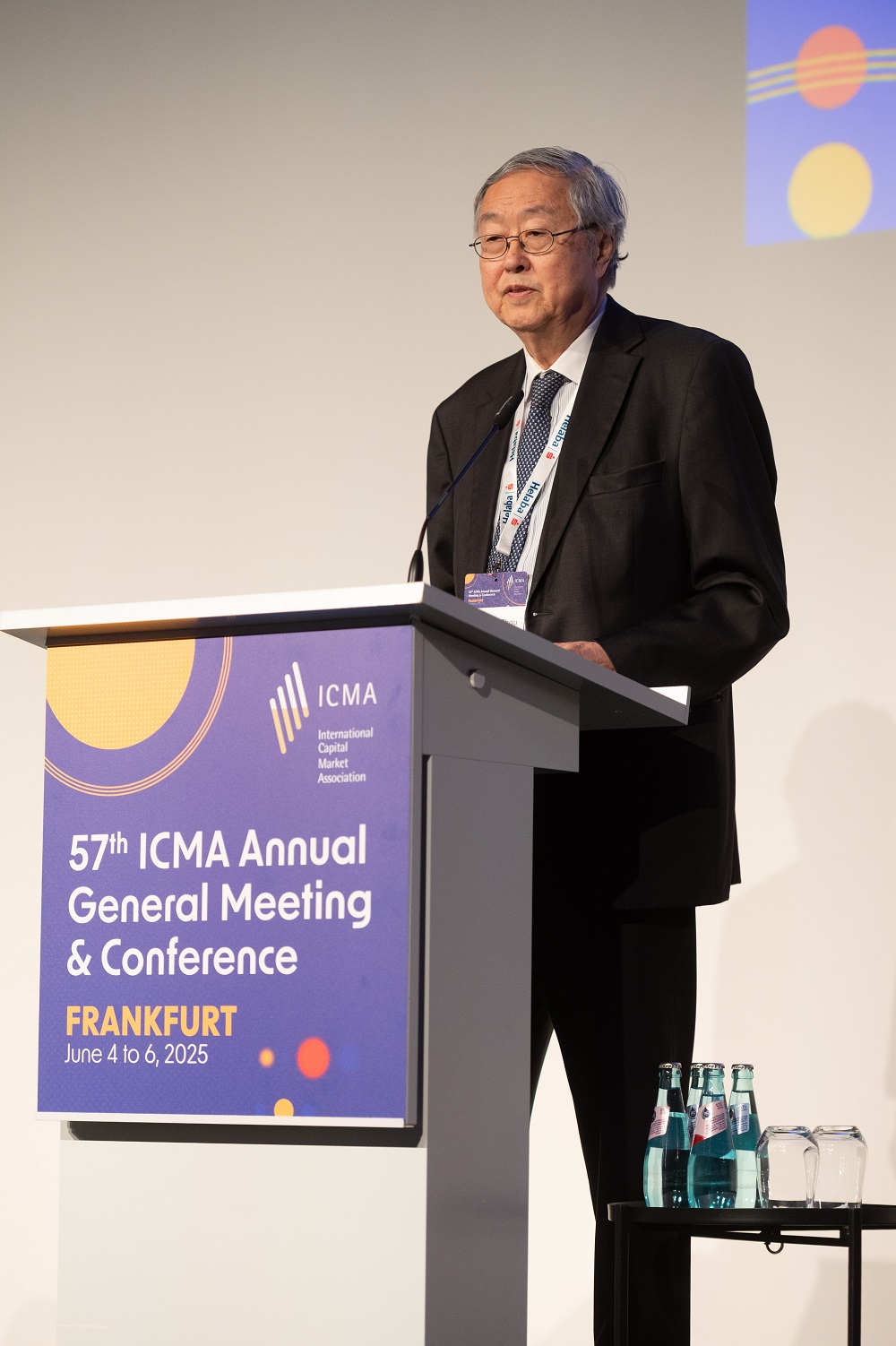
Dr. Zhou Xiaochuan is the Vice Chairman of the Boao Forum for Asia and the Former Governor of the People’s Bank of China.
He highlighted 4 main challenges for the implementation of digital currencies.
The first challenge is to the money supply and the function of the central bank. He argues that stablecoins ambitions to act like central banks is concerning, given the fact they do not understand monetary policy and central bank functionality as well as the central bankers.
The second challenge is how digital currencies interact with financial services. In the context of stablecoins, it is vital to weigh up whether the new tech aligns with the needs of the financial services industry.
In China specifically, there has been much debate around whether digital assets should be token- or account-based and centralised vs decentralised. With their CBDC solution, they decided to design it as an account-based product, serving as an elegant extension and upgrade of the existing payment system.
The third issue is the challenges to the payment system and infrastructure of financial sector. Currently, stablecoin wallets can be set up on the principle of KYC, however it is questionable about whether the due diligence for this process is up to scratch.
Similarly, AML and terrorist financing are major concerns as most stablecoins currently operate outside of regulation. This has led to large flows of money being used for illicit purchases, laundering money or funding terrorist groups.
Finally, the fourth challenge is how cryptocurrency is changing the capital market trading mechanism. In APAC, this has started already with the Hong Kong Monetary Authority approving more than ten stablecoin trading institution licenses.
We must ensure that the use of digital currencies enhances the capital market system and does not destroy it.
As he closed, Dr. Zhou highlighted that the development of digital currencies has huge potential for greater efficiency and lower costs – however it is not without its risks.
It is for this reason that he implored the delegation to continue to do their homework on the technology, developing research, analysis and responses to challenges as we look forward to a better future with digitalisation.
|
|
|
|
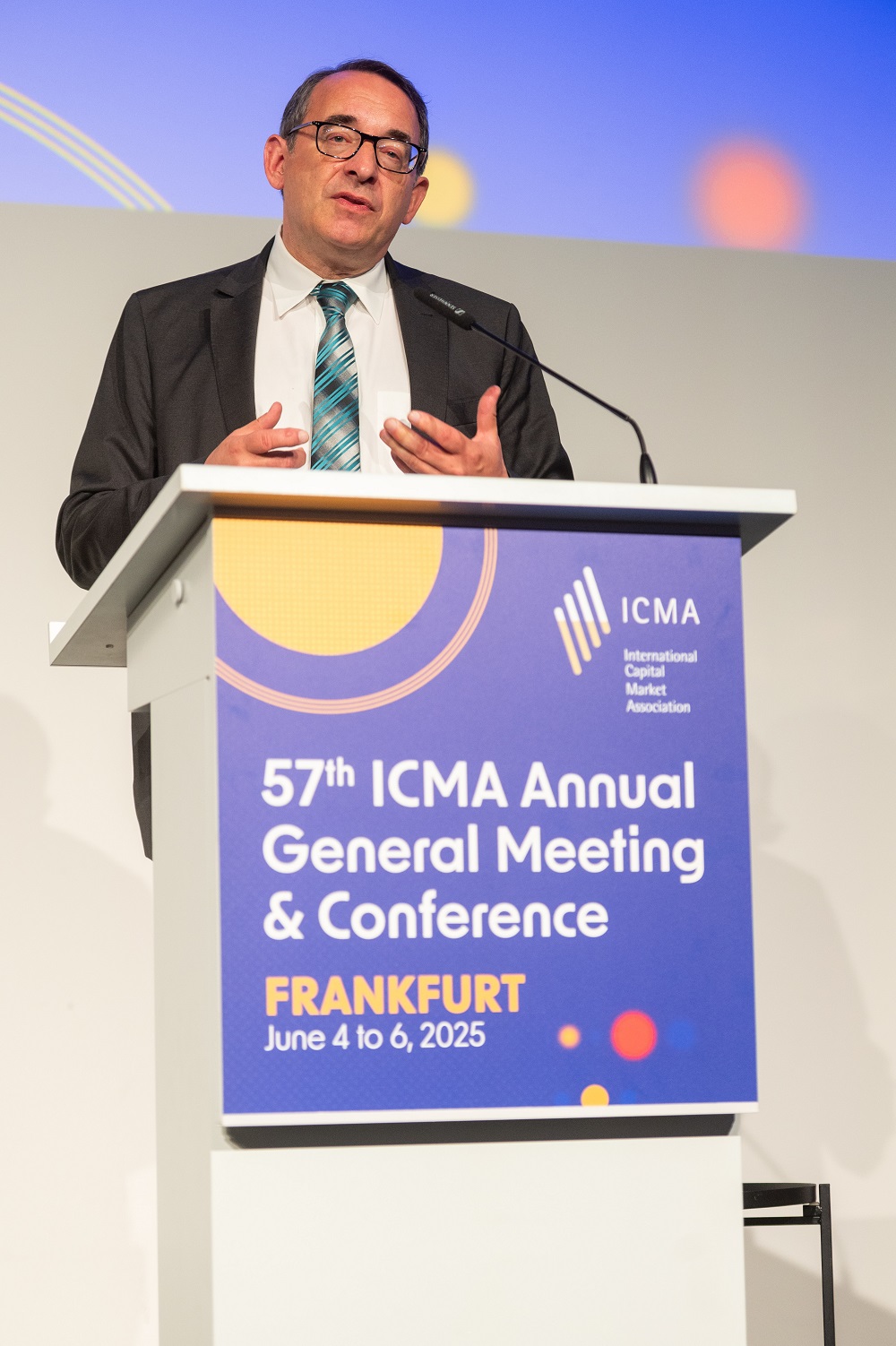
Dr. Ralph Alexander Lorz, Finance Minister of Hesse, Germany, spoke about the success of Germany’s financial services, highlighting how Germany’s unique geography has benefitted the industry.
With the political and financial bubbles separated by the hundreds of miles between Berlin and Frankfurt, it allows for the cities to focus purely on what they do best.
Dr. Lorz was incredibly bullish about Frankfurt, highlighting that it is the only city containing the headquarters of two central banks, as well as an incredible plethora of research and educational institutions, producing an incredible talent pool.
He maintained that there is a commitment from the German government to boost financial services, specifically capital markets.
In his words, deep capital markets are a necessary prerequisite for financing transformation, which is a big task for the German government as the economy is in its third year of recession.
He did offer hope – he reassured the delegation that Germany and the EU will prosper again and promised that Germany and Europe as a whole wants to install itself as an anchor of global stability and trust.
|
|
|
|
How is the trading picture for fixed income evolving?
|
|
|
|
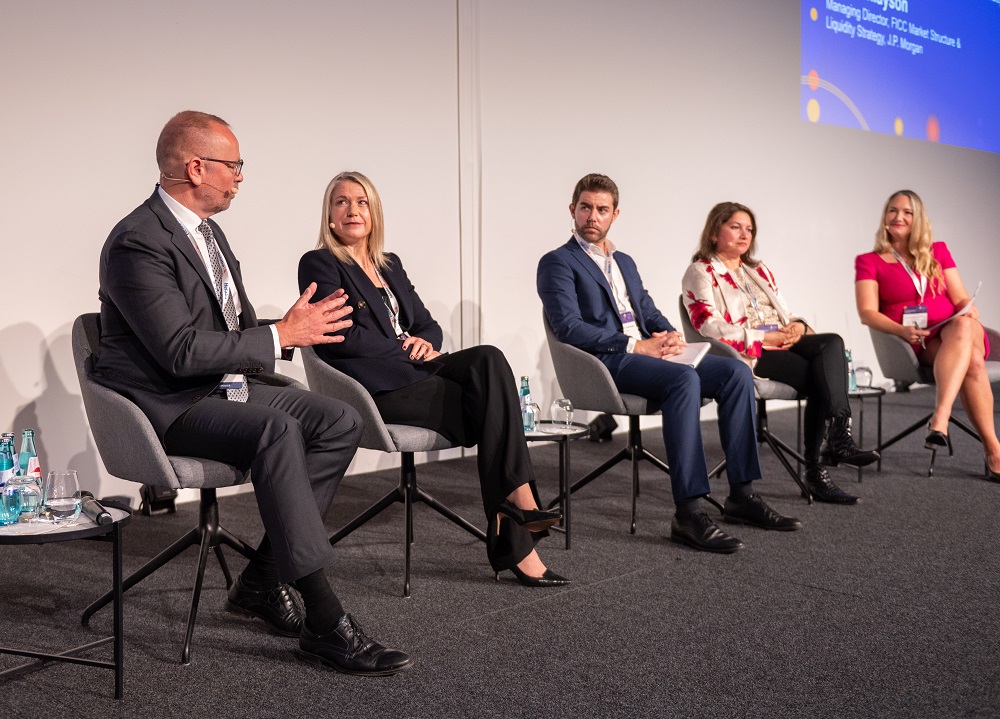
The panel delved into how automation and regulatory change are making waves in the fixed income landscape, tackling issues such as new trading protocols and the influx of new market entrants and products.
In particular, panellists expressed their thoughts on how AI and the rise of algorithmic trading will be used in fixed-income and the crucial importance of advancing data modelling to look into future trends.
Pauli Mortensen, Global Co-Head of Fixed Income Trading, Market Strategies, Norges Bank Investment Management, highlighted the importance of being smart about electronification to boost liquidity.
Alberto Martín Jusdado, Head of Business Development, Electronic Trading Solutions, valantic FSA, delved into how firms are adapting to increasing digitisation, given that it not only brings more efficiency, but also more complexity to the industry. Firms now have to deal with many different platforms and protocols, and need support in navigating this digital landscape.
Angela Lobo, Head of EMEA eSales & Sales, Chief Operating Officer, Jefferies International, also gave insight into the rise of algorithmic trading and the increased liquidity they’re providing. This, however, also brings challenges as firms have more choice when finding best execution, which means that algorithms are gamifying the market.
Kate Finlayson, Managing Director, FICC Market Structure & Liquidity Strategy, J.P. Morgan, spoke about how AI will change trading, reducing cost, introducing more efficiency, but all based on data-backed decision making.
|
|
|
|
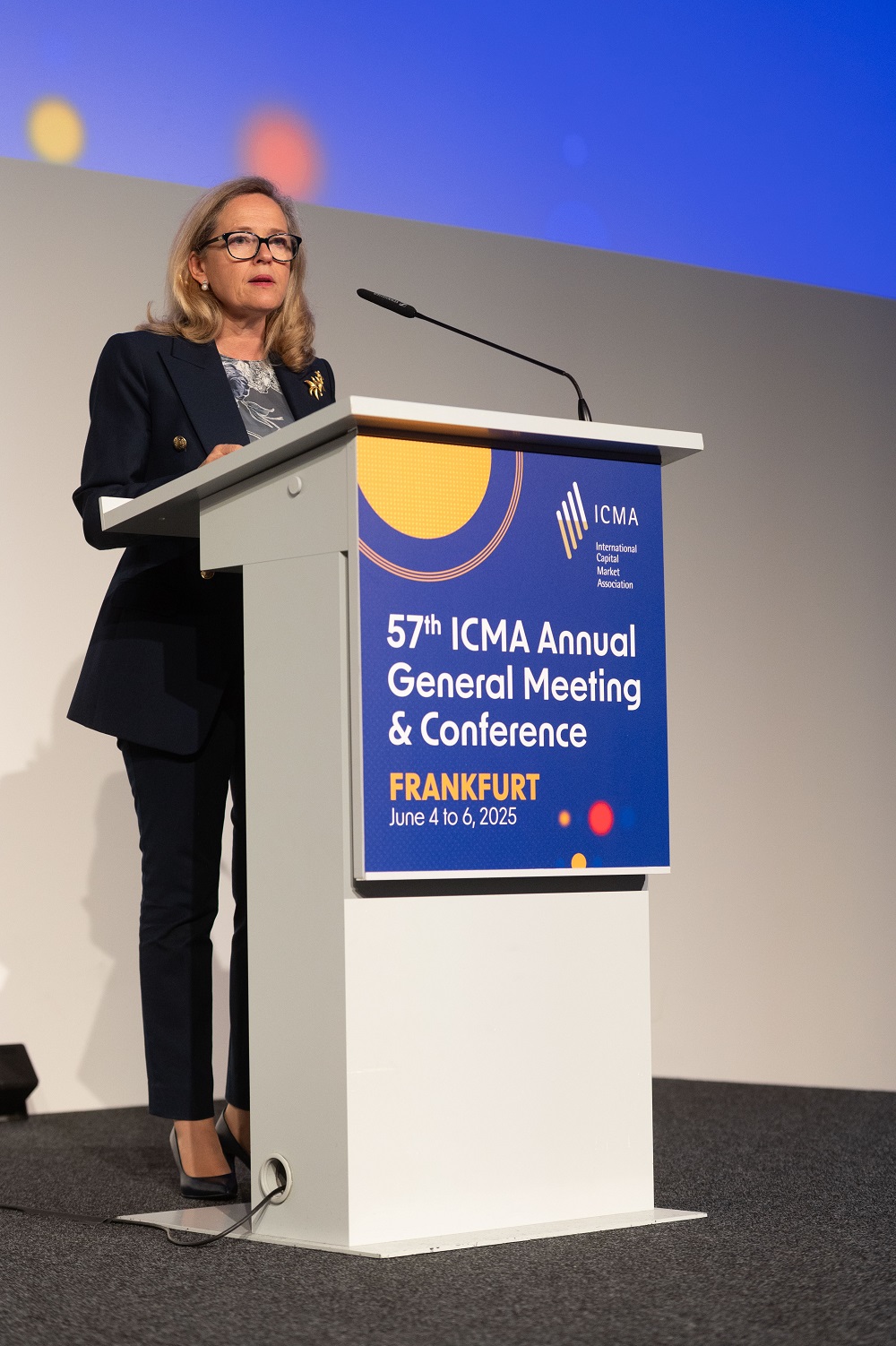
Nadia Calviño, President of the European Investment Bank, shared why Europe is the best place to do business and invest in.
She highlighted Europe’s position as a beacon of confidence, predictability and rule of law. For the last 80 years, Europe has been a bastion of stability despite geopolitical and geoeconomic unrest across the globe.
Building on this stability, she said it is time for Europe to do more. Her message was simple – “it’s time to choose Europe.”
To support this, she shared five initiatives that the EIB is undertaking to cement this message.
Firstly, developing the security and defence sector to make it a world-leader. This includes working with KFW to undertake large European infrastructure projects.
Secondly, the EIB will shortly be launching Tech EU, a platform to support startups and provide funding for ‘higher-risk’ and innovative companies throughout their journeys from seed to IPO.
Third, they are developing a pan-European export credit guarantee for companies trading with Ukraine, with the aim of mobilising over €300mn for Ukrainian support
Fourth, pumping up the European securitisation market. The main aim of this is to support new financing for green investments.
And finally, working closely with the ECB and European Commission to reestablish the international role of the euro. This has been done to date with the EU’s pioneering role in digital and green bonds, working in lockstep with ICMA throughout the journey.
|
|
|
|
Bridging the financing gap: the role of private credit markets
|
|
|
|
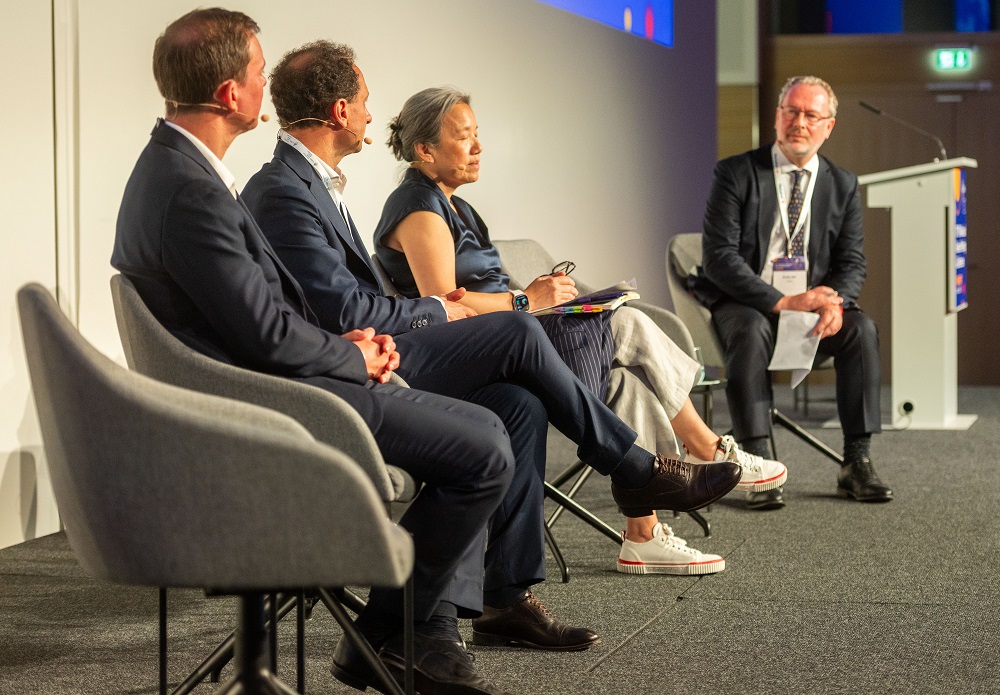
The panel, moderated by our Managing Director, Andy Hill, explored the drivers of growth in private credit over recent years, both in the US and Europe, and how the market has developed. Panellists dived into a discussion on private credit’s relationship with public markets and the huge impacts and opportunities that volatility brings to these markets.
Ruth Yang, Managing Director & Global Head of Private Market Analytics, S&P Global Ratings, spoke about private credit’s long history and reminded delegates that the broadly syndicated market is a runway to the private credit market. She also discussed private credit’s higher risk tolerance and its ability to fund smaller companies, giving it a key role in the market in powering innovation.
Paolo Grassi, Head of Leveraged Finance EMEA, Global Capital Markets, BNP Paribas, also reaffirmed that private credit is here to stay, highlighting its huge growth in Europe over recent years.
Meanwhile, Damien Guichard, Head of European Private Credit, Allianz Global Investors, spoke about how Europe is behind the US in the private credit market, despite its rapid growth, and stressed its need to catch up.
|
|
|
|
Securitisation markets and regulation: What lessons should we learn?
|
|
|
In this panel discussion, moderated by Andrew Bryan, Knowledge Director at Clifford Chance, contributors discussed the key changes that have occurred in the securitisation markets in the aftermath of the great financial crisis, in addition to the regulatory changes that need to be made to continue its development in the EU.
Regulation has an outsized place in the securitisation markets, meaning that it impacts day-to-day work more than in other asset classes. These are both positive and negative, with this regulation providing a lot more data for transactions which is incredibly useful, but also meaning the markets are much more restrictive.
The panel included Mark Whelan, Head of Funding & Liquidity, AIB; Janet Oram, Head of Asset Backed Securities, Universities Superannuation Scheme Ltd; Flávia Palacios, Chief Executive, Opea and Member of the Board of Directors, ANBIMA and Avisha Sookhee, Director, Alternative Credit Europe Product Development, DWS Alternatives Global Ltd.
|
|
|
|
Keynote: The Innovation Imperative - Transforming European Capital Markets
|
|
|
|
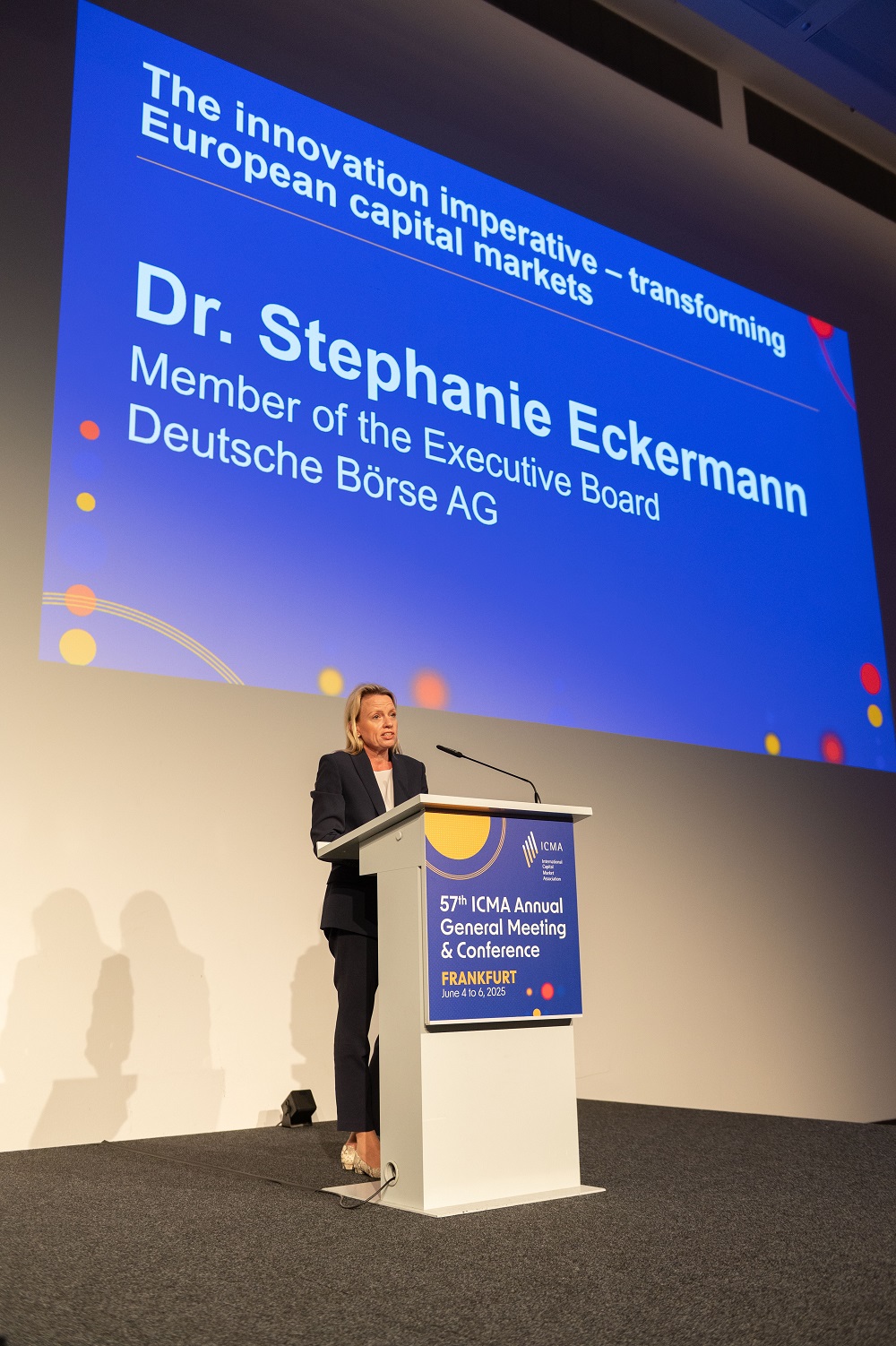
In a frank and honest speech, Dr. Stephanie Eckermann, Executive Board Member at Deutsche Börse AG, explored the struggles of European capital markets in the last few years. She highlighted that between 2006-2021, European market share of global capital markets shrunk by 44%.
So, how do we fix this? Dr. Eckermann believes Europe needs to be more innovative and inviting.
Regulatory misalignment and inefficient non-digital processes are holding Europe back. This can only be solved if regulations, public institutions and markets come together to solve.
Innovation is also key to changing this. A new generation of investors are in the market. Armed with flashy, easy to use interfaces and greater technological capabilities, investors are now demanding the same from their financial institutions as they do from the fintech apps they use day to day.
Similarly, the rise in retail investors, Dr. Eckermann said, whilst great to see, has put pressure on traditional market players to streamline their operations and fully digitise.
She pointed out that innovation is not all about technology, although it is a crucial enabler. True innovation starts with a shift in mindset. It is all about challenging the status quo and focusing your efforts on major pain points. By doing this, we can overcome the fragmentation which has plagued Europe and building stable and fluid capital markets
Dr. Eckermann’s message was clear, if we can leverage effective collaboration, deploy our expertise to develop cutting edge solutions and support in bringing them to market, we can build unbelievably strong European and global capital markets.
|
|
|
|
Innovations in issuance - the pioneering efforts of SSAs to increase capacity
|
|
|

|
The panel, moderated by Isabelle Laurent, Deputy Treasurer and Head of Funding at The European Bank for Reconstruction and Development, touched on innovations in their specific geographies, discussing the social benefits of products such as green bonds and the work that went into them. Chief among the aims of green bonds is to both reduce climate change while also lifting the world’s poorest out of poverty.
In some regions, these green bonds have created jobs and internships in low carbon industries. In turn, this brought down heating and gas cost for households, all of which helped to put more money into people’s pockets.
A common theme was the pioneering work of ICMA with its support and guidance throughout the bond issuance process.
This discussion included Tom Ceusters, Director of Capital Markets and Investments at IFC, Dr Tammo Diemer, Managing Director at Germany Finance Agency, Jessica Pulay, Chief Executive Officer at UK Debt Management Office, Nobuki Sato, Director of the Debt Management Policy Division, Financial Bureau at Ministry of Finance, Japan and Omar Seifani, Treasurer at African Development Bank Group.
|
|
|
|
The state and future prospect for the repo market
|
|
|
|
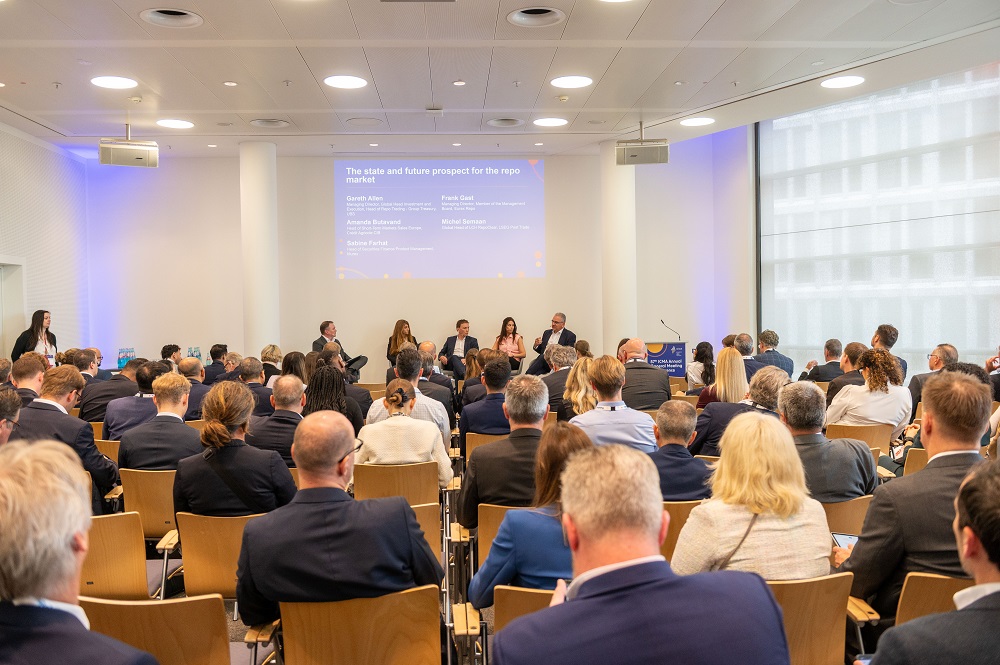
The panellists, moderated by Gareth Allen, Managing Director, Global Head Investment and Execution and Head of Repo Trading at UBS, first discussed the question “Are we in the golden era of repo, or is the market still maturing?”, analysing it through a product lens.
The experts agreed that they expect more to come from the repo market, even suggesting that the market is in a stage of perpetual transformation. They also questioned repo's future as a standalone product, highlighting that it is part of the broader financial ecosystem.
In addition, when it comes to new products and structure in the repo market, the panel noted that different products are arising in different jurisdictions. For example, products in Asia are now diverging from the US and Europe, making global standardisation a challenge.
In terms of capital, contributors highlighted that banks are constrained in terms of what they can do, but need to make sure they’re able to provide the necessary liquidity. Crucially, repo markets must function to shift the provision of liquidity towards those who really need it. The key issue is how much more regulation they’re able to bear.
Digitisation was also a hot topic, including DLT, particularly on the post-trade side, with its potential to make processes more efficient.
In 2030, panellists agreed that the repo market will look a lot more digital and inclusive, with bigger volumes that capture the entirety of the market.
The panel included Charlie Badran, Head of AXA Financing at Axa Investment Managers, Amanda Butavand, Head of Short Term Markets Sales Europe at Credit Agricole CIB, Sabine Farhat, Head of Securities Finance Product Management at Eurex Repo and Michael Semaan, Global Head of LCH RepoClear at LSEG Post Trade.
|
|
|
|
The future of primary debt markets - striking the balance between vision & reality
|
|
|
|
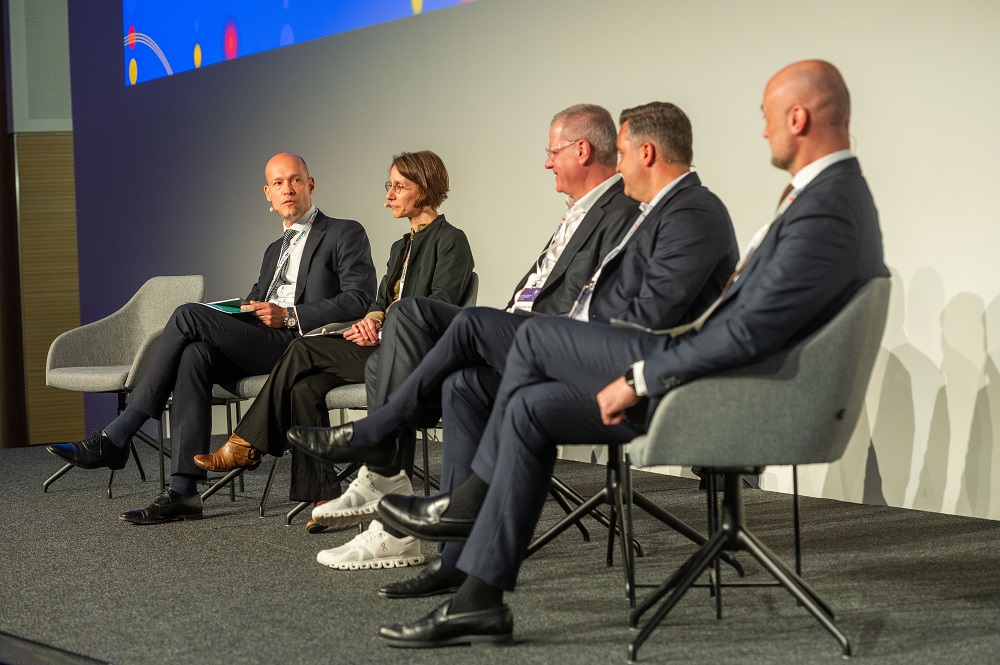
Change is inevitable in capital markets, and in fact they thrive on it, transmitting the pulse of the global economy through the markets. In this session, moderated by Armin Peter, Capital Markets Transformation Adviser, panellists discussed finding the balance between vision and reality in capital markets to safeguard continuity while ensuring we’re on track to develop modern and innovative models.
Tim Armbruster, Group Treasurer and Head of Financial Markets, KfW, pointed out that a new trend emerging in markets is rising fragmentation, which he says is set to continue.
He said that we must work around it, shifting to resilience and sovereignty. For this to work, scalability of financial markets is crucial, as well as deploying technologies such as AI, crypto and DLT to bring down fragmentation.
Audrey Metzger, Director, Innovation and Financial Market Infrastructures, Banque de France said that innovation is very important and that it must be used to maintain and promote financial stability.
These includes looking at how new technologies can be used to drive this agenda. For example, continuing to promote experimenting with CBDCs as a method of maintaining financial stability within different scenarios.
According to Christoph Hock, Head of Tokenisation & Digital Assets, Union Investment, technology is the key driver for innovation nowadays – whether its cloud technology, smart data, AI, quantum computing or DLT. However, he maintains there is still more to be done. We are still not at full scalability with these technologies and won’t be for some time – for now it is about experimenting and treading a realistic path for this tech to come to common usage.
Adam Bothamley, Global Head of Debt Capital Markets, said that HSBC, like many others, see themselves as stakeholders of the market in which they operate – a key point to bear in mind when talking about developing a market.
Ultimately though, investment in innovation has to make sense from a client service perspective, be revenue generating over time, and needs to be cost efficient.
When asked their wishes at the end of the panel, they included CBDCs being widely adopted, delivering innovative solutions for their clients and taking responsibility and enabling greater innovation.
|
|
|
|
Mobilising savings and investment: driving growth and competitiveness in the EU
|
|
|
|
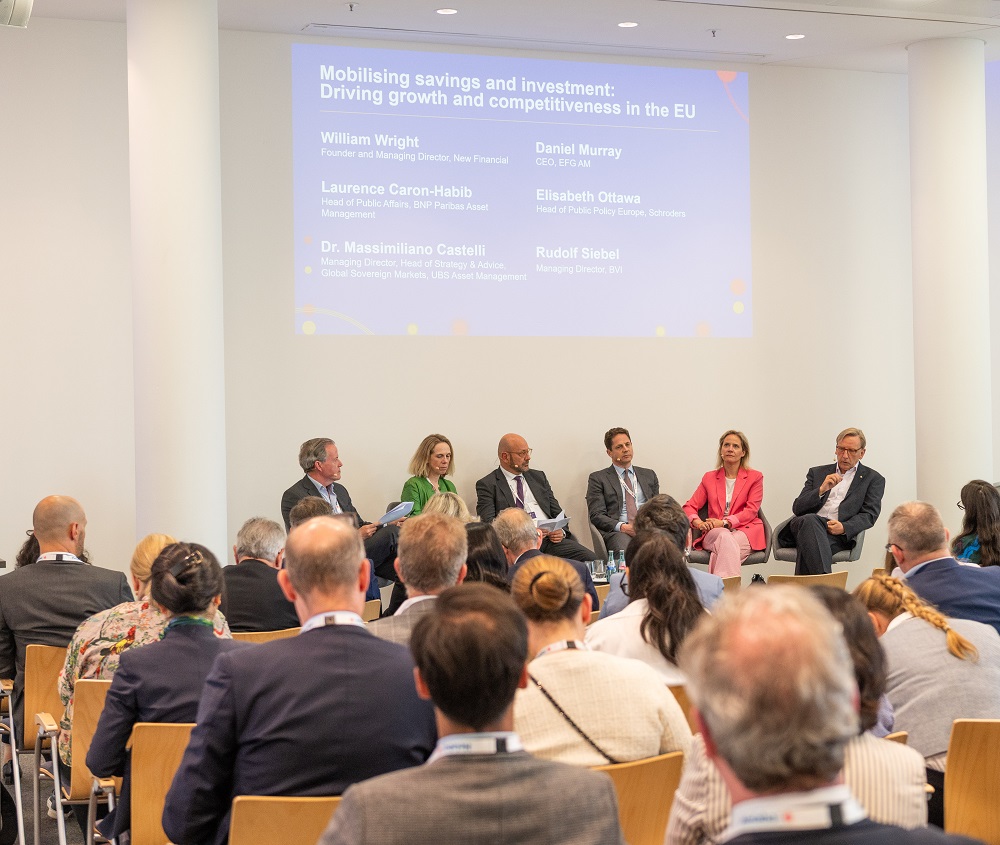
Currently, a third of EU wealth is sat in cash deposits, and retail investment is only a quarter as large as that of the US. As a result, European markets aren’t as well-positioned to meet the needs of investors as they are in other regions, such as the US. With many recent reports, such as the European Commission's Draghi Report, outlining the need to convert more savings to investments, there is now a sense of urgency around initiatives that will encourage investors to do so.
Panellists, led by William Wright, Founder and Managing Director of New Financial, discussed how the EU can foster a greater investment culture among retail investors, highlighting the need for more accessible investment pathways, including modernising pension frameworks.
The reason for which there isn't enough retail support for capital markets in Europe is a lack of available tools and information to help investors get involved. A cognitive distortion exists in that retail investors are unable to perceive long-term threats, such as the pension gap, eliminating any sense of importance and urgency around investing. In addition, if retail investors are unable to see others investing, then they’re unlikely to do so themselves.
One solution is to use the internet and social media to educate retail investors and encourage them to activate their savings. Panellists also outlined the need for high-level political involvement and intervention to get people investing. In particular, regulation around investor protection must be sure not to go as far as to exclude retail investors from getting involved in the market.
Panellists agreed that the key to unlocking savings was not only to introduce tax incentives to get retail investors involved in the market, but also to ensure that investing products are simple and easy to use, so that people from all backgrounds are able to take advantage of them.
Funnelling savings into investments in the European economy is essential for the EU’s competitiveness and growth.
Contributing to this panel were Laurence Caron-Habib, Head of Public Affairs, at BNP Paribas Asset Management, Dr. Massimiliano Castelli, Managing Director, Head of Strategy & Advice, Global Sovereign Markets, at UBS Asset Management, Daniel Murray, Deputy CIO & Global Head of Research, EFG AM, Elisabeth Ottawa, Head of Public Policy Europe, at Schroders, Rudolf Siebel, Managing Director, at BVI
|
|
|
|
Headwinds and tailwinds shaping the sustainable finance market
|
|
|
|
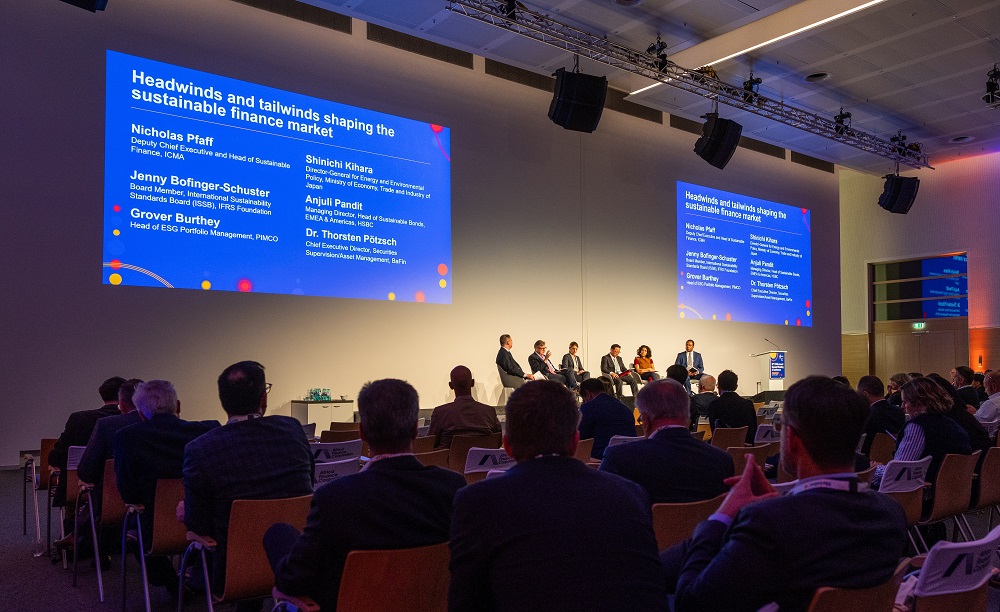
In our final panel session of the day, Nicholas Pfaff, our Deputy Chief Executive and Head of Sustainable Finance led a conversation on the challenges and catalysts for sustainable finance.
The panel gave a strong overview of the EU’s efforts to put up more sustainability regulation and further international progress around corporate sustainability.
Panellists discussed how governments can make it clear that the private sector needs to move fast, agreeing that not only would it need a big carrot for encouragement, but also a big stick to ensure that there are consequences for those lagging behind.
The contributors also mentioned the importance of cutting red tape and unnecessary regulation around sustainable investment and ensuring that regulations are user-friendly to encourage greater uptake.
The differences in climate challenges between Europe and Asia were also highlighted, including the huge jump in energy consumption witnessed in Asia, but not in Europe, and the different paces of renewable energy transitions. These factors are important to take into account when designing a global roadmap towards sustainability.
The key challenges of our time were highlighted as pushback from the US and a lack of support for the decarbonisation of high emissions sectors. Overcoming these will require strong collaboration between Europe and the rest of the world.
Panellists included Jenny Bofinger-Schuster, Board Member, International Sustainability Standards Board (ISSB), IFRS Foundation, Grover Burthey, Head of ESG Portfolio Management, PIMCO, Shinichi Kihara, Director-General for Energy and Environmental Policy, Ministry of Economy, Trade and Industry of Japan, Anjuli Pandit, Managing Director, Head of Sustainable Bonds, EMEA & Americas, HSBC and Dr. Thorsten Pötzsch, Chief Executive Director, Securities Supervision/Asset Management, BaFin.
|
|
|

|
“The momentum is now on Europe’s side – but it will not be endless.“
This was the key takeaway from Dr. Sabine Mauderer, First Deputy Governor Deutsche Bundesbank as she delivered the final keynote speech of the day.
She highlighted the numerous global headwinds currently, such as trade fragmentation through tariffs, over-capacity in China leading to concentration risks and country-specific challenges such as demographic change and SMEs still relying on manual processes.
She also brought up broader challenges, such as climate change, debt to GDP ratios growing significantly across emerging, developing and advanced economies, which brings about high risk of financial instability and reduced room for governments to manoeuvre.
However, despite all this – Europe is holding up incredibly well. The euro has appreciated against a basket of other countries, including the dollar and the European equity markets have been outperforming their peers.
On a national level, German bonds have acted as a certainty anchor and safe haven, whilst other large economies have seen massive instability.
In this context, she emphasised the crucial role of the Eurosystem in preserving price stability but more broadly proving what Europe can do when working together.
Europe is a beacon of democracy, rule of law and checks and balances, and these principles will always remain the backbone. For this reason, Europe has benefitted from high levels of uncertainty in other regions, which has led investors to uncover Europe as a safe haven.
But how can Europe retain this title? Dr. Mauderer argued that financial resources must be funnelled into productive investments, not consumptive ones.
Also, the private sector must continue to invest in areas like digitisation and AI to drive innovation in disruptive technology.
Finally, we must invest in our people. A successful Europe, Sabine argues, relies on a skilled population and social cohesion. So, investing in a well-functioning education system that includes good universities is of paramount importance.
|
|
|
To access the full list of sponsors & exhibitors, please click here.
|
|
|
|
|
|
|